
- There is no one best translation; the right choice depends on your goal, whether study, devotion, or easy reading.
- Translations sit on a spectrum: word-for-word, thought-for-thought, and paraphrase.
- Word-for-word (ESV, NKJV, KJV, NASB) is ideal for close study.
- Thought-for-thought (NIV, NLT, CSB) balances accuracy and readability for everyday reading.
- Paraphrases (The Message, The Living Bible) bring freshness for devotional reading alongside a study Bible.
- The best translation is the one you will actually read, understand, and return to.
Why Choosing the Right Bible Translation Matters
Bible translations vary in their approach, influencing how Scripture is understood and applied. Some translations prioritize word-for-word accuracy, while others focus on conveying meaning in contemporary language. Theological considerations also play a role, as different translations stem from varying manuscript traditions and interpretive philosophies. Choosing the right Bible translation ensures clarity, doctrinal soundness, and accessibility based on individual needs and study goals. For insights into how oral traditions have influenced biblical history, you might find this article on The Vital Role of Orality in Biblical History helpful.Common Bible Translations
Several Bible translations are widely used today, each with distinct features:- King James Version (KJV) – A classic translation with poetic language and historical significance. (Read more about KJV)
- New International Version (NIV) – Balances readability with accuracy for modern readers. (Read more about NIV)
- English Standard Version (ESV) – A more literal translation, favored for study and scholarship. (Read more about ESV)
- New Living Translation (NLT) – Focuses on dynamic equivalence for ease of reading. (Read more about NLT)
- The Message – A modern paraphrase designed for contemporary engagement. (Read more about The Message)
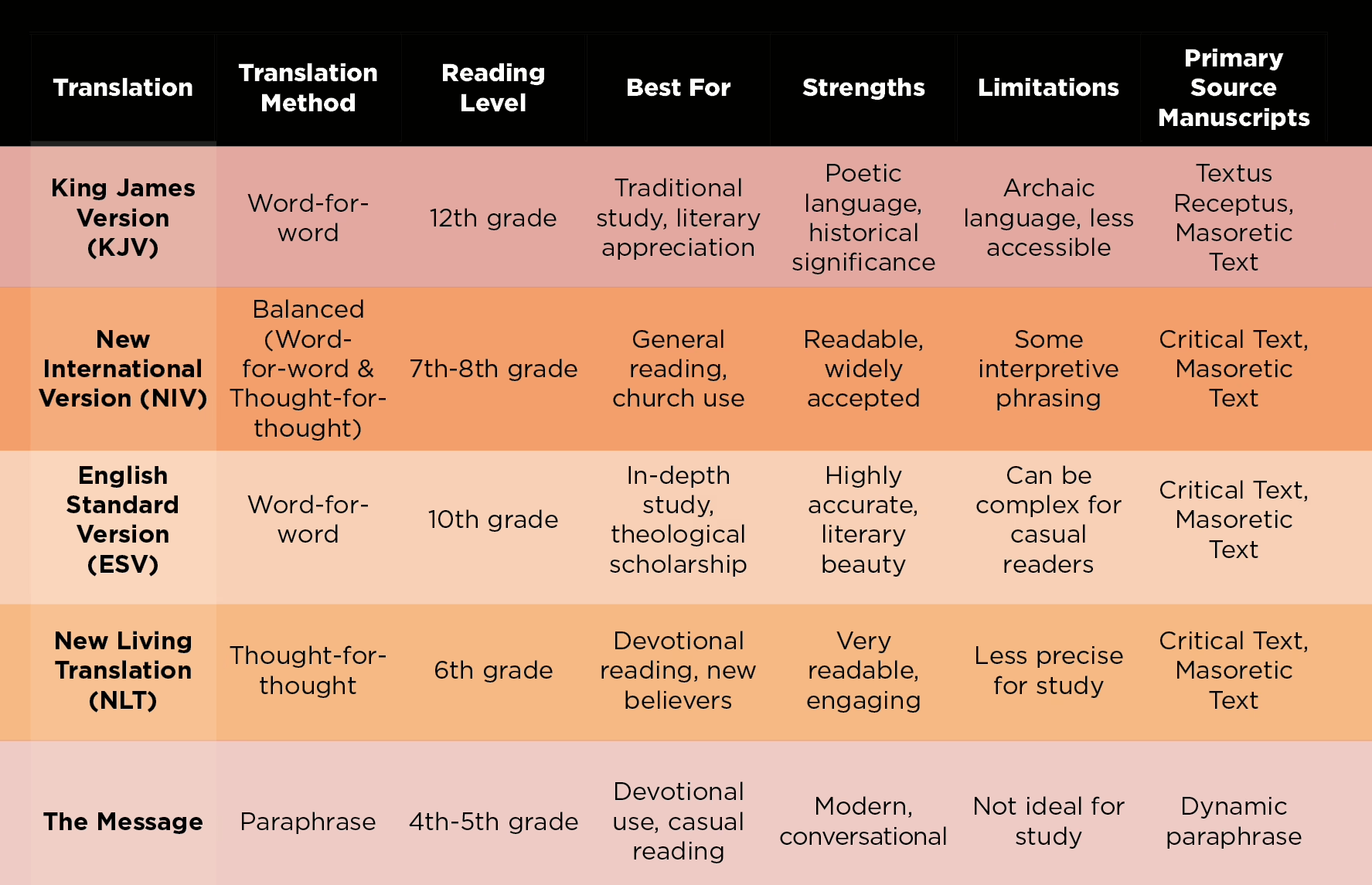
Factors to Consider When Choosing a Bible Translation
When selecting a Bible translation, consider the following:- Language Style: Formal (word-for-word) vs. dynamic equivalence (thought-for-thought).
- Readability: Ease of understanding for different audiences (new believers, scholars, children).
- Theological Perspective: The accuracy and faithfulness of translation philosophy.
- Purpose: Study, devotional reading, preaching, or outreach.
King James Version (KJV)
The King James Version (1611) remains one of the most widely recognized and respected translations. Known for its poetic and majestic language, it has influenced Christian faith and literature for centuries.Strengths:
- Beautiful and reverent language.
- Rooted in the Textus Receptus manuscript tradition.
- Rich historical significance.
Limitations:
- Archaic language can be difficult to understand.
- Lacks modern manuscript discoveries for textual accuracy.
New International Version (NIV)
The New International Version (NIV) aims to balance readability with faithfulness to the original texts. First published in 1978, it remains one of the most widely used translations today.Strengths:
- Accessible and clear language.
- Balances literal and dynamic translation methods.
- Widely accepted in churches and study groups.
Limitations:
- Some verses are phrased with interpretive choices that differ from literal translations.
- Not as precise for in-depth scholarly study.
English Standard Version (ESV)
The English Standard Version (ESV) is a word-for-word translation that prioritizes accuracy while maintaining readability. It is often chosen for serious Bible study and theological scholarship.Strengths:
- Faithful to original manuscripts.
- Ideal for deep study and exegesis.
- Retains literary beauty while improving accessibility.
Limitations:
- More complex sentence structures may be challenging for casual readers.
- Less accessible for those unfamiliar with biblical language.
New Living Translation (NLT)
The New Living Translation (NLT) employs a thought-for-thought approach, making it one of the most readable translations available. It is particularly beneficial for devotional reading and new believers.Strengths:
- Highly readable and engaging.
- Uses modern, natural language.
- Great for personal devotion and outreach.
Limitations:
- Not ideal for rigorous word-for-word study.
- Some interpretative paraphrasing.
The Message
The Message is a paraphrase rather than a formal translation, designed to make Scripture more conversational and relatable. It is often used for devotional reading rather than in-depth study.Strengths:
- Fresh and modern phrasing.
- Engaging and easy to understand.
- Useful for new believers and casual reading.
Limitations:
- Not a word-for-word translation.
- Loses some precision found in traditional translations.
Other Popular Translations Worth Knowing
Beyond the translations above, a few more are worth having on your radar, because the right fit is personal.
New King James Version (NKJV): A faithful update of the beloved KJV that keeps its reverent, majestic tone while replacing archaic words like “thee” and “thou” with modern English. A great choice if you love the King James feel but want easier readability.
Christian Standard Bible (CSB): A newer translation built for “optimal equivalence,” sitting comfortably between word-for-word and thought-for-thought. It is accurate enough for study and smooth enough for everyday reading, which makes it a popular all-purpose option.
New American Standard Bible (NASB): Widely regarded as one of the most literal, word-for-word translations available. If your priority is staying as close as possible to the original Hebrew and Greek wording for deep study, the NASB is hard to beat.
The Living Bible (TLB): A warm, highly readable paraphrase that puts Scripture in plain, everyday language. Like The Message, it is wonderful for devotional reading and for helping new readers grasp the heart of a passage, best used alongside a more literal translation.
Which Bible Translation is Best for You?
The best Bible translation depends on individual needs and purposes. Here are some recommendations:- For Deep Study: ESV or KJV
- For Readability & Daily Use: NIV or NLT
- For Devotional Reading: The Message or NLT
- For Historical & Literary Significance: KJV
- For Teaching & Preaching: ESV or NIV
Finding the Bible Translation That Speaks to You
Selecting a Bible translation is a personal journey that should align with spiritual growth and understanding. Exploring different translations through side-by-side comparison can provide greater insight into God’s Word. Regardless of the translation chosen, the most important aspect is engaging with Scripture consistently and allowing it to transform lives. For additional tools to compare translations, check out Bible Study Tools and YouVersion Bible App. As 2 Timothy 3:16 reminds us, “All Scripture is breathed out by God and profitable for teaching, for reproof, for correction, and for training in righteousness.” Whether through a formal or dynamic translation, God’s Word remains powerful and life-changing for all who seek Him.Bible Translations: Frequently Asked Questions
What is the best Bible translation?
There is no single best translation for everyone. The best one depends on your goal. For close study, choose a word-for-word version like the ESV, NKJV, or NASB. For everyday reading, a thought-for-thought version like the NIV, NLT, or CSB works well. For devotional freshness, a paraphrase like The Message or The Living Bible is ideal. The best translation is the one you will actually read.
What is the difference between word-for-word and thought-for-thought translations?
Word-for-word translations (formal equivalence) render the original text as literally as possible, staying close to the exact wording. Thought-for-thought translations (dynamic equivalence) translate the meaning of each phrase into natural modern language. Many readers benefit from keeping one of each side by side.
Which Bible translation is the most accurate?
Accuracy depends on how you define it. Word-for-word translations like the NASB and ESV are closest to the original Hebrew and Greek wording, while thought-for-thought translations aim to accurately convey the intended meaning in clear modern language. Both can be trustworthy for different purposes.
Which Bible translation is easiest to read?
The New Living Translation (NLT) is one of the easiest standard translations to read, and paraphrases like The Message and The Living Bible are even more conversational. These are excellent for new readers, younger audiences, and devotional reading.
What is the best Bible translation for new believers?
New believers often do best with a clear, accurate, thought-for-thought translation like the NLT or NIV. These balance faithfulness to the text with readability, so Scripture feels approachable rather than overwhelming while you build a reading habit.
Is the King James Version still a good translation?
Yes. The KJV remains beloved for its beauty, rhythm, and historical influence, and it is still faithful to the text. Some readers find its older English challenging, in which case the New King James Version (NKJV) keeps the same reverent tone in more modern language.
What Bible translation is best for in-depth study?
For in-depth study, word-for-word translations like the ESV, NKJV, and NASB are excellent because they stay close to the original wording. Many students pair a literal translation with a readable one like the NLT to compare wording and meaning side by side.


